


FULL CIRCLE
The Story of How A.J. Croce Started Performing His Dad's Music
By Dr. Joshua Sherman
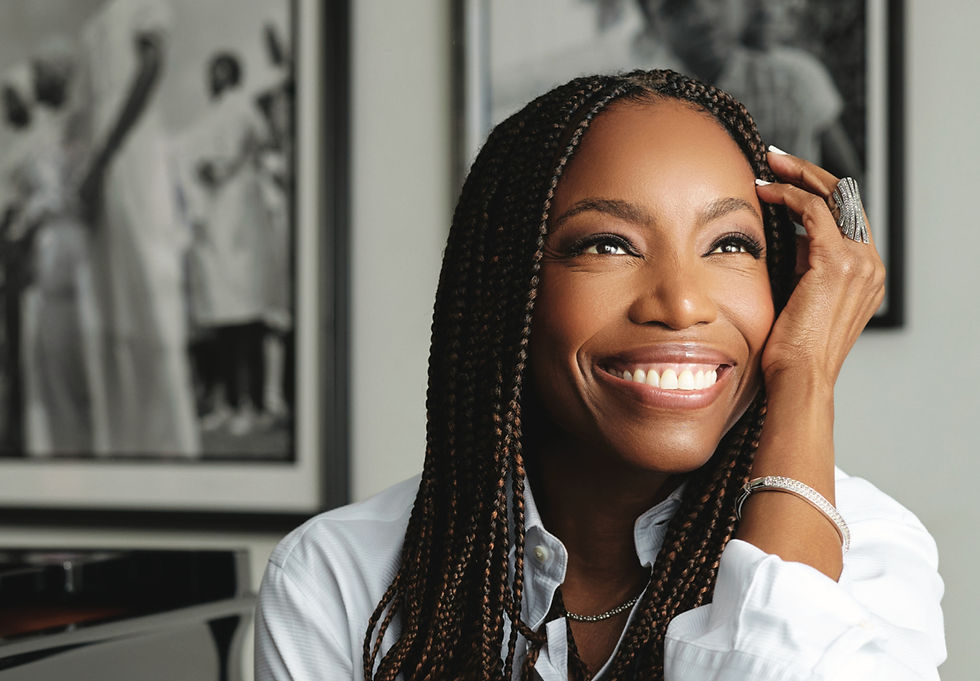
Photo By Jim Shea

On Friday, October 23, singer-songwriter, pianist, and multi-instrumentalist A.J. Croce will bring his celebrated Croce Plays Croce tour to the Mahaiwe Performing Arts Center in Great Barrington. The son of legendary songwriter Jim Croce—whose timeless classics include “Time in a Bottle,” “I Got a Name,” and “Bad, Bad Leroy Brown”—A.J. spent more than three decades avoiding publicly performing his father’s catalog while forging his own remarkably eclectic career in blues, jazz, soul, Americana, rock, gospel, and piano- driven roots music. That journey was shaped not only by artistic independence, but by personal hardship: the loss of his father at age two in a plane crash; years of childhood blindness caused by abuse within his home (he later regained partial vision); and the devastating loss of his wife of 24 years. Through it all, music became both refuge and lifeline.
Over the course of 11 studio albums, collaborations with artists ranging from Ray Charles and B.B. King to Willie Nelson and James Brown, and decades of touring, A.J. Croce established himself not simply as “Jim Croce’s son,” but as a deeply respected artist in his own right.
In recent years, however, Croce Plays Croce has become something more profound than a tribute tour; it is an emotional reconciliation between father and son, legacy and individuality, grief and celebration. That evolving relationship also informs his most recent album, Heart of the Eternal, a deeply reflective collection exploring mortality, faith, loss, resilience, synchronicity, and human connection.
Here, Croce reflects on the unexpected path that brought him back to his father’s music:
I waited more than 30 years to ever play any of my dad's music. Of course, I loved his music, I worked behind the scenes for almost 30 years on his publishing, making sure that his musical legacy was maintained and that his music would be heard and so forth. It wasn’t for a lack of respect and love of his music. It was simply that I felt it was important to do my own thing.
And I’d had offers—from the time I was about 16—to record his music, and it could have been good from a success point of view, if you consider fame “success.” I might have gotten more recognition out of the gate with that, but it wasn’t where my heart was. I was really wanting to challenge myself with music. Ultimately, a few things served as the catalyst for Croce Plays Croce:
The first was in my early 30s. I was a piano player, but a little more than 20 years ago, I started playing guitar. That was one factor.
Second, I was transferring all of my father’s music from tape to digital for archiving purposes, and in the process, I found one particular tape that was really eerie. It was a recording of my father playing all of these songs I’d never heard him play. They were all covers. I have over 100 tapes of him preparing to play shows, hanging out with friends, and playing new songs. Most of them are covers that he played while getting ready for concerts, but this one tape was just uncanny. Every single song was something I’d been playing since I was 13 or 14 years old. It was really obscure stuff. It was Fats Waller, but not famous Fats Waller. These were really deep cuts of Fats Waller. In fact, I had played one of them on my first demo for Columbia Records. Then there was obscure Bessie Smith stuff, Pink Anderson, Jimmy Rogers, Sonny Terry and Brownie McGhee, Mississippi John Hurt—one after another, every single song. Not just the artist, but every single song was something I had covered. And I realized that he and I had this really deep musical connection. So, all of a sudden, I had a new friend that had the same taste in music as I did, and it happened to be my father. So, it was a really beautiful discovery, and it gave me chills.
Then, on what would have been his 70th birthday, I had the opportunity to play a small show, and I thought it would be fun to perform some of his music. And it was great; I could actually see the audience, and I saw how much they were moved by the music. I could see that they were really touched, and it was palpable. I realized I could do this every once in a while, for the fun of it.
A number of years went by again, and someone asked if I would be interested in doing a PBS show of both his music and my music. I said, “I don’t know if I’m quite ready. I don’t know what the show would look like.” But no one had ever asked me to play my music AND his music together. And I started to think about how it might go. What would it look like? What instruments would I play? Would I play guitar the whole time, or do I get to show off and play piano and do what I do?
Periodically, at one of my concerts, I would throw a song of his into the set. No one expected me to play “Operator” or “Leroy Brown”or “Time in a Bottle.” So, I would throw something in, and just for the fun of it see if anyone recognized it, because by that point, me playing my father’s music was out of context.
When I started touring with the Croce Plays Croce show, I developed a more concrete idea of how I wanted to do it, because I understood that so much of it was about the stories. It was about my father’s story, it was about my story, and it was about our multi-generational musical family. I felt like it was important to share that experience and to share the stories behind the songs, both my father’s and mine, and the connection that we have to them all.
A.J. Croce takes the stage at the Mahaiwe Performing Arts Center in Great Barrington on October 23 at 7:30 p.m. mahaiwe.org


Comments