


Dickinson to Dolly
- Jul 14
- 9 min read
Updated: Jul 24
Author digs deep to get to Dolly Parton's roots in Ain't Nobody's Fool
By Anastasia Stanmeyer
Photos Courtesy of Martha Ackmann
July 2026
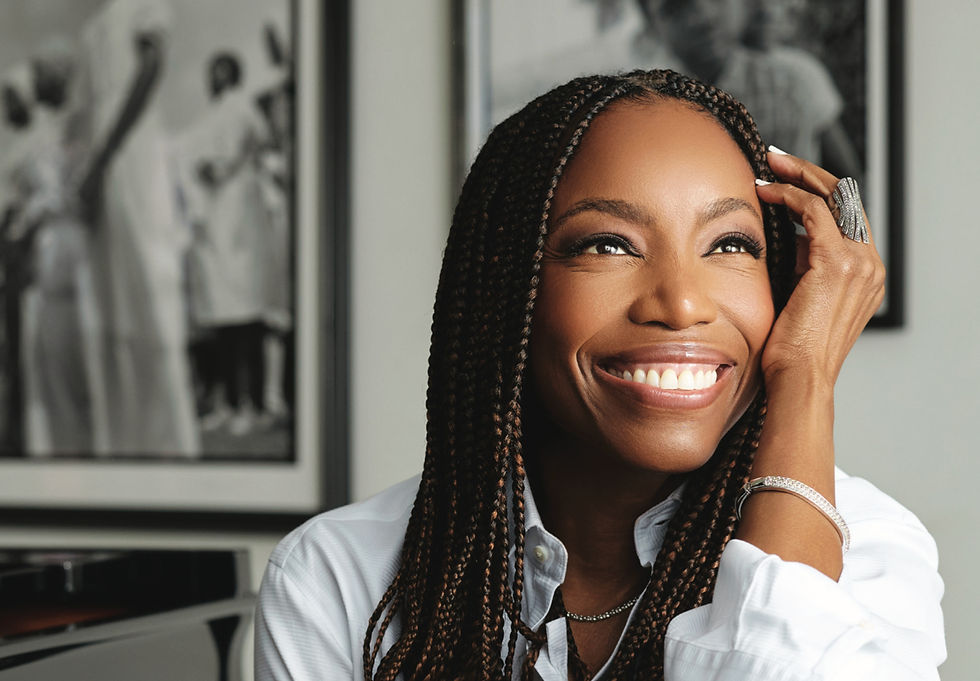
What's not to love about Dolly Parton? The name alone brings forth feelings of strength, femininity, and nonconformity. I remember loving her country-pop album Here You Come Again when I was barely a teenager, especially the title song. She has been a part of America’s consciousness for more than a half century, and there have been dozens of books written about her. (If you were fortunate enough, you saw her perform live at Tanglewood in 2016.) As a journalist, I find that sometimes the way to learn about a person isn’t necessarily by talking directly to them, but by talking to the people around them, from different phases of that person’s life. And that’s exactly what Martha Ackmann did. Her thorough research and reporting is apparent in Ain’t Nobody’s Fool: The Life and Times of Dolly Parton, Ackmann’s latest non-fiction biography that traces Dolly Parton’s life from an impoverished childhood in the Smoky Mountains to international stardom. Ackmann’s niche is writing about women who have changed America, including trailblazing Negro League baseball player Toni Stone (Curveball), poet Emily Dickinson (These Fevered Days), and The Mercury 13: The True Story of Thirteen Women and the Dream of Space Flight. On July 20 at 4 p.m. and July 21 at 11 a.m. at The Mount, Ackmann will sit with me to talk about her latest book. To give you a peek into what we will discuss, I’ve included parts of a recent discussion we had.

You’ve written a lot about notable women. Why did you choose Dolly?
I see Dolly as an American original. I get teased a lot by my friends who say to me, “You go from Dickinson to Dolly.” I like women who know what they want to do. Often, what they want to do is not what society thinks they should be doing. That’s certainly the case with Toni Stone, the baseball player, or the would-be women astronauts that I wrote about. And Dolly certainly fits that mold. She knows her own mind. One of the things that I discovered in writing the book was that from a very early age, she was intensely focused and had the confidence. I think she has changed the face of country music. I think she has brought in all kinds of new fans. She certainly was doing that in the ’70s and ’80s, when she began to branch out more to popular music. And she represents what is best about America. One of the things that’s so remarkable about Dolly is she keeps reinventing herself and in doing so, she continues to appeal to a broad swathe of people.
She definitely connects with younger artists.
Yeah, Sabrina Carpenter and others. Dolly is 80 years old, but she’s finding ways to continue to be out there, and in particular with women artists coming up. They admire her and respect how smart she is about the business. There’s that famous story I tell in the book of Elvis wanting to buy the published rights to “I Will Always Love You.” Dolly didn’t have two cents to rub together when that happened. She could have used the money, but she knew that was her intellectual property. As difficult as it was to say “no” to Elvis Presley, she did. And so I think a lot of young women performers understand how important that is. Control what you create. The other thing is Dolly managed to keep her private life out of the tabloids. Her marriage was sacrosanct.
Her husband, Carl Dean, really didn’t want the limelight.
And she respected that. Dolly’s mother told her “Always keep something for yourself.” That became almost scripture to Dolly. It was really something that she embraced. Her private life was sacred, and that was not something that could be commodified. She said it kept her sane and kept her rooted. We definitely live in a different world now.

It’s like everybody knows her, but her personal life is unknown.
Yes, that’s such a magic act that she does, maintaining privacy while seeming to be the most out there, relatable, accessible person. It’s a real dance, and I admire it. There are a lot of books about Dolly, but I was trying to do a social and cultural perspective on her importance. I wanted to take Dolly Parton seriously. I don’t want to see her as a confection or the stuff of tabloid fodder. I wanted to go deeper.
And the book certainly does that.
One of the things that became a touchstone for me was that I wanted to learn more about her family and her ancestors. I found oral histories that her uncle had written after he came home from World War II that talked about Dolly’s grandmother and the family growing up in the Smoky Mountains. One thing that resonated with me is what the grandmother told her pack of kids. They’d all be running around in the valleys and creeks during the day. She said that when it gets dark and the only place the sun is shining is on the Pinnacle—this is a mountain in the Greenbrier area of the Great Smoky Mountains—and everything else is dark, it’s time to come home. That hit me as such an important family value and a metaphor for Dolly. When things get dark, she does head home. And she represents the idea that when things get dark for anyone, you head home—not just literally, but to your values, to your people, to what has rooted you and made you. She never forgets that.
You obviously interviewed a lot of people and did your research for this book.
I wouldn’t have turned down the chance to interview Dolly, and I tried my darnedest. I did send her a book recently, and I keep a list of questions that I would like to ask Dolly by the phone. If that phone rings, I’m ready to go. You do get a different perspective by interviewing the people around her, and by doing historical research. You don’t ask the second baseman on a baseball team to call the game, because he’s right in it. That’s why you have somebody up in the booth. I found out about the “White Caps” who used to run around in East Tennessee, targeting so-called “wanton women.” That was a force that ran through her whole upbringing.I’ve never believed that there’s a definitive biography about anybody. Hopefully, a biographer brings his or her own perspective to what they’re doing. But I do think I offered some new insights, certainly some new voices. I wanted to poke around corners and look at people who had never talked about Dolly but give us a very interesting point of view on her, from her first boyfriend to the cousins to her neighbors to studio musicians. It was wonderfully fun to talk with all those people.
Who is your audience for this book?
I always think that my books speak to a NPR listening crowd, people who are interested in taking a serious look at things that are cultural and historical. But people interested in Dolly Parton are much broader. So, it is a bit of a of a juggling act. I’ve always tried to write narrative nonfiction that hopefully gets the reader to turn the page. That’s the most important thing that a writer can do is to get you to turn the page. I didn’t want to talk about things that I thought cheapened her. I didn’t want to do boob jokes. I wanted to talk about how the way she looks has affected her. And I wanted to do it in a serious way.
I’ve always wondered how she was able to keep that teeny-tiny waist.
That tiny waist was there from the very beginning. One of her cousins told me that when they’d be going to school, Dolly would have a belt on tight, and she’d ask her cousin to get behind her and cinch it. I remember her cousin said, “Dolly has to thank me for that waist.” You look at Dolly’s sisters, and many of them look very, very similar, and the next generation. When Dolly began Dollywood, one of the reasons she wanted to do it was to give employment opportunities to East Tennesseans and a lot of her family. Later on in the book, I talk about one of her aunts who said that when she worked at Dollywood, when people found out that they were related, they said “silicone this and silicone that.” She said, “But that is the way we look, and it’s been a burden.” Obviously, Dolly has had plastic surgery. I didn’t go into that a lot. Frankly, it didn’t interest me. She has nipped and tucked. She makes jokes about it. Dolly always uses humor so effectively, and none more so than the way she handles the boob jokes. In the ’70s, the comments were relentless. And you look back upon those and just shake your head and say, “Oh my God, no one would stand for that kind of stuff now, hopefully.” But she found a way to get out ahead of the joke. That’s been her most effective tool. Then the joke’s on somebody else.

You’ve said you’re a big fan of Dolly. In what way?
I can remember the first time I saw Dolly Parton. I was at my grandparents’ house when I was a teenager, and she was on The Porter Wagoner Show. My grandparents on Saturday night, used to watch that and Lawrence Welk. I just remember thinking, even as a kid, that there’s a lot more going on there.I couldn’t put my finger on it, but she intrigued me. And then I really like her music, from the very early Coat of Many Colors and Joshua to the crossover Here You Come Again. I’ve been to many concerts. When I started actually writing the book, which I had in the back of my mind for about 20 years, I was able to begin to answer that question that I asked myself as a teenager, “What is going on there?” The answer was this is a serious musician. This is a woman who takes her creativity seriously. This is a talented musician. The business savvy, the philanthropy, the way she has reinvented herself, I think are quite a testament to her, to her commitment, her energy, and her hard work.
That’s one of the things that I am enjoying about reading this book, is that every star has a story, and hers is obviously quite unique.
Yes, it is. When she first got to Nashville at age 18, having just graduated high school, the first in her family to do so, it was none other than Chet Atkins who said she sounds like a screech owl. Porter Wagoner said he found ways to make her sound more appealing technically in the studio. That first year or so, she got to be so used to rejection that she was quite flabbergasted when Fred Foster finally took her on.
Dolly appeals to a wide array of people. It seems like she has a lot of faith in God, and that was incredibly important in 1982. Can you tell me a little bit about that dark time and how it changed her.
The faith comes from her family and the community that she lives in, and most specifically from her grandfather on her mother’s side, Jake Owens was his name, a self-educated Pentecostal minister who ran a church called the House of Prayer. He was a man who liked music, liked words, liked poetry. He was not a farmer and didn’t earn much of a living, but he was very much a man of faith. Dolly would go to that church all the time. It’s where she first began singing, and then she began singing in other churches. As she grew older,I think Dolly began finding her own definition of faith. She believes that she has a gift to share with the world. There was a period in the ’80s when she began to put on weight, and her career was not going the way she wanted to. There was a brief moment when she contemplated suicide, and she realized she was the one who had to lift herself up. She said that was the only period of time where she couldn’t hear a voice in her head—a voice of a spirit, a voice of God, a voice of a higher power. Every place she’s ever lived, she has built a chapel of sorts. She prays a lot. She said what got her through these last six months after the death of her husband has been prayer and taking better care of herself physically. And she’s always writing. Writing is one way for her to get out of herself.
Is Dolly the same person when she’s not in the public eye?
She sees the public Dolly Parton as a persona. She talks about her hair and makeup and clothes as her “get up.” She once referred to herself as “this cartoon of a woman.” She’s very aware of the way she projects herself, and yet she’s also that same country girl who lived in a place without electricity or running water. She is that eight-year-old’s idea of glamour, and it became an image that worked for her. She said that people are drawn in to the outrageous way in which she looks. She doesn’t look nearly as outrageous now as she did in the 1970s. But then she has something to work against, because she then has to prove it to the audience that she has talent, that she’s worth listening to. Dolly once wanted to do an album of Dylan’s song. She invited him to appear on one of her early television shows. Nothing ever came of it, and she said she thinks that he was put off by the way she looked. She called him “a weird buckaroo.”
Martha Ackmann, author of Ain’t Nobody’s Fool: The Life and Times of Dolly Parton, will be in conversation with Anastasia Stanmeyer. Monday, July 20, at 4 p.m., and Tuesday, July 21, at 11 a.m. This talk is part of The Mount’s Summer Author Series. edithwharton.org


Comments