


From Investment to Impact
MILL TOWN’S BLUEPRINT FOR A STRONGER PITTSFIELD AND BERKSHIRE COUNTY
By Scott Edward Anderson
When Samantha Farella received the Core Impact Award from Mill Town Foundation, she experienced something rare in her work as a reading specialist: she felt truly seen. “The recognition helped me realize that what we do is impactful,” Farella says.

At Williams Elementary in Pittsfield, Farella works daily with some of the city’s most struggling readers, helping students discover that magical moment when letters become words, words become sentences, and suddenly, reading clicks.
“We do this every day. I see kids who start the year and cannot read, and by the end they’re reading,” says Farella. “It’s nice to be recognized once in a while for that hard work that oftentimes in education goes unnoticed.”
Farella’s story exemplifies a larger shift in Berkshire County, one that’s being amplified as Mill Town Foundation transitions from a private foundation to a public charity—a strategic evolution that reflects national best practices for sustainable community transformation and opens new doors for broader funding, governance, and community participation.
A New Chapter for Community Investment
Mill Town Foundation, founded by Dave Mixer eight years ago, is transforming how it approaches community revitalization. The shift from private foundation to public charity represents more than just a change in tax status; it represents an evolution from one person’s vision to a community-driven initiative that can attract outside resources and incorporate diverse voices in decision-making.

As a private foundation, Mill Town was funded primarily by Mixer’s Mill Town Capital investment firm and operated with a board largely reflecting his vision. As a public charity, the organization must raise funds from multiple sources, maintain a more diverse board, and demonstrate broader community support, requirements that strengthen its mission of sustainable community development.
“We’re a get-it-done firm,” says Mixer, whose “venture philanthropy” model, emphasizing a results-oriented approach to revitalization, has generated more than $132 million in economic activity across the region over the past eight years, with over $107 million centered in Pittsfield alone. “We make things happen from a business perspective and a sustainable perspective.”
This transition aligns Mill Town with research from the Knight Foundation, which recently examined revitalization efforts in nine American cities and identified three key characteristics of successful initiatives: strong local context awareness, strategic acceleration of impact, and concentrated investment approaches. Mill Town’s evolution reflects these best practices while positioning the organization to scale its impact.
According to a UMass Donahue Institute study, every $100 in revenue from Mill Town initiatives produced an additional $49 in regional economic activity, including $5.1 million in local tax impacts. But behind those numbers are people like Farella, individuals whose work is often invisible but deeply impactful.
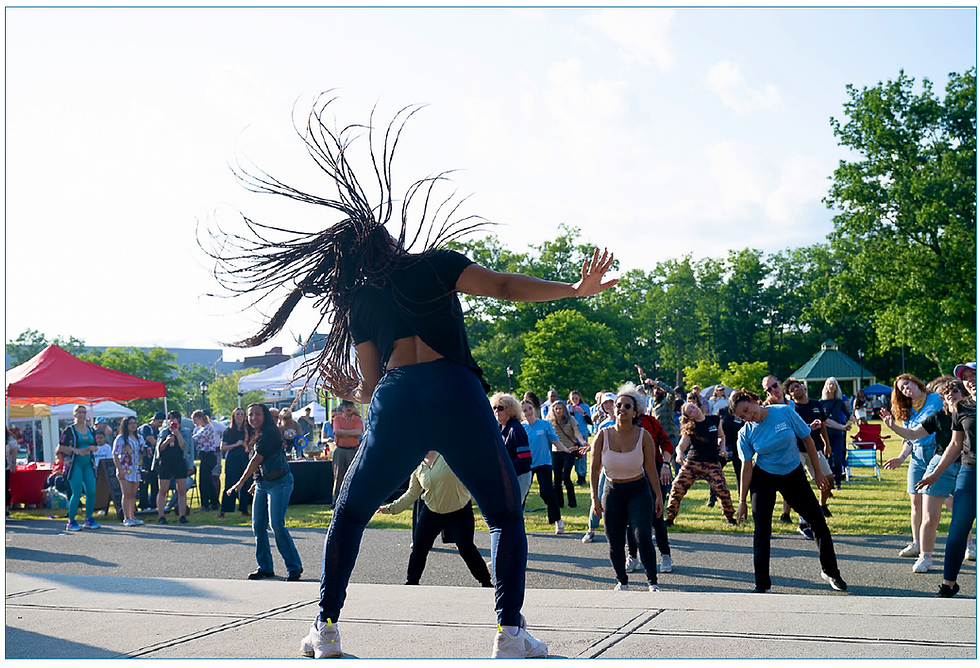
Through initiatives like the 40 Under Forty and Core Impact awards, Mill Town turns the spotlight toward local changemakers, especially those in education and the nonprofit sector who rarely receive recognition.
“The work that’s getting done through some of those fields, especially in education and the nonprofit sector, those are unsung heroes that don’t often get the spotlight they deserve,” says Andy Wrba, the foundation’s program director.
The 40 Under Forty program awards emerging leaders $1,000 each to donate to a nonprofit of their choice, resulting in $40,000 in annual community support. Farella, who was a recipient this year in addition to her Core Impact recognition, chose the Love of T Foundation, a local mental health nonprofit where her husband is board chair. Additionally, the 40 recipients are invited to a leadership development retreat at Kripalu to build long-term capacity for local business and civic leaders.
The Core Impact Awards recognize one staff member from each of Pittsfield’s 14 public schools, often serving as a launchpad for deeper engagement. “Recognizing these folks and the good work they’re doing is one part of it,” says Wrba. “The long-term vision is all for the benefit of the community.”
Investing in Place: Art, Identity, and Energized Neighborhoods
Mill Town’s mission also extends to the visual fabric of the city. Through its support for the Let It Shine public art program, the foundation is partnering with artists, schools, and neighborhoods to transform Pittsfield’s public spaces into sources of community pride.
“Most of what I’ve been doing is community-based work with students in Pittsfield public schools and creating murals together,” says artist Huck Elling, whose collaborative murals now brighten building across the city.
One standout project included 173 students from Morningside Elementary, whose photographs now form a large-scale mural on the Morningside Community Center/YMCA’s exterior in a bold and joyful celebration of local youth.
“This is their neighborhood; this is their place,” Elling says. “And their smiles create so many more smiles.”
For Mill Town, this kind of visual investment speaks to a deeper mission: fostering “energized neighborhoods” as drivers of broader revitalization. As Mixer puts it: “If you could create one energized area that has newness and a buzz to it, it would go a long way.”
Mill Town’s impact stretches across Berkshire County through strategic partnerships. Laura Brennan, economic development program manager at the Berkshire Regional Planning Commission (BRPC) and new Mill Town board member, points to the foundation’s early support for BRPC’s first-ever countywide outdoor recreation plan, which led to additional investment and the creation of the web-based resource Berkshires Outside.
“Outdoor recreation is a very big part of our economy, a very big part of why people visit, but also why the quality of life is so strong,” Brennan says. “The more we can highlight these opportunities, the more people want to come back and maybe even put down roots. That was my own story. I came as a visitor and stayed largely because of outdoor recreation opportunities.”
Expanding Resources and Voices
Mill Town’s focus on energized neighborhoods rather than just business districts aligns with the Knight Foundation study’s finding that mixed-use, community-centered areas prove more resilient than employment-focused cores, particularly relevant as cities adapt to post-pandemic economic realities.

The transition to public charity status enables Mill Town to pursue funding from foundations, corporations, and government sources that typically don't support private foundations. More significantly, it requires a more diverse board structure that brings additional perspectives to programmatic decisions—an evolution from Mixer's individual vision to a community-driven approach.
The transition has generated both enthusiasm and thoughtful consideration within the regional philanthropic community. While there is interest in creative approaches to philanthropy in the region, others have expressed healthy skepticism about Mill Town’s ability to bring outside resources to the region, although that is certainly something that many funders would welcome, as the problems in the Berkshires extend beyond the geographic focus of some funders.
Lori Kiely, managing director of the Berkshire Bank Foundation, views Mill Town’s plan to attract funding from beyond the region as a welcome development for Berkshire County, something the public charity status makes possible through eligibility for grants and partnerships previously unavailable.
“As funders, we don’t necessarily compete with one another,” she explains. “We welcome additional resources, especially those that can tap into funds from outside the area that we might not otherwise have access to. Anytime we can bring more funding into Berkshire County, it’s a positive thing for our community.”
Mill Town’s board expansion includes local business leaders and community nonprofit representatives, fulfilling public charity requirements while strengthening its community connections. In addition to Brennan, the board now features members from Greylock Federal Credit Union, the Massachusetts Business Roundtable, Berkshire Community College, and Guardian Life Insurance. Additionally, it includes Jason Cuyler of Second Street Second Chances, which provides reentry services to formerly incarcerated individuals returning to Berkshire County, and Jessica Vecchia, co-founder of Roots Rising, which started the first youth-run farmer’s market in Pittsfield.
“They’ve been very thoughtful about who will be on the inaugural board,” says Brennan. “The team they have invited in provides an understanding of regional needs and brings other minds, perspectives, and expertise to the table.”

The Knight Foundation research indicates that such a diverse stakeholder network is crucial for the long-term success of revitalization efforts. Mill Town's formal recognition as a public charity will be confirmed through IRS documentation, marking the completion of this strategic transition.
The commitment to sustainable impact extends to every initiative. The foundation avoids launching “unfunded programmatic stuff,” as Mixer puts it. Every project must be either endowed or built to be self-sustaining, a discipline that ensures lasting impact while preventing speculative development that can displace long-term residents. This business-like approach could attract new supporters and residents looking for quality of life, natural beauty, culture, and purposeful communities.
A Model Worth Replicating
Mill Town’s approach may also offer a replicable model for small cities and other rural regions: recognize your quiet heroes, invest in infrastructure that lasts, and build partnerships that deepen over time.
Back in Farella’s classroom, students continue to discover the joy of reading. Around the city, Elling’s murals help young people see themselves reflected in their community’s transformation. These individual moments of recognition and pride form the foundation of broader change.
As Mill Town’s model evolves and expands, it’s helping answer a crucial question for communities across America: how do you create lasting change that grows from within? In the Berkshires, that answer is emerging, guided by research-backed strategies and powered by local heroes who were always there, waiting to be seen.


The generate password feature provides a convenient approach to creating fresh credentials. It can reduce the time spent on manual password creation and make the process of setting up different online accounts much smoother.
A Qué Hora Juega La Lotería es un sitio muy útil para quienes buscan información actualizada. En cuanto a tu publicación, espero que pronto encuentres una distribución corregida para el nuevo currículo de Música de primer grado. Gracias por abrir este espacio donde los docentes pueden compartir materiales y apoyarse mutuamente.
Where do you find good album recommendations for classic and indie music? I'm constantly looking for new music recommendations, especially for classic rock, indie, and older country, but most sites just repeat the same top 10 lists. I want something that actually digs deeper into albums and artists beyond the obvious hits. Any recommendations for a solid music guide site?
More business owners appear to be comparing SEO Company in Toronto options before choosing a marketing partner. Long-term SEO continues to be a priority.